
For global logistics managers handling shipments on the Asia-Europe and Asia-US trade lanes, the arrival of summer means two things: gearing up for peak retail shipping season, and bracing for monsoon season across Asia.
Running from June through September, monsoons are an essential life source that delivers up to 80% of South and Southeast Asia’s annual rainfall. It is also a recurring stress test for global trade with severe port delays, flooded inland transit routes, and widespread cargo backlogs.
As manufacturing heavily diversifies across hubs like China, India, Vietnam, Bangladesh, and Indonesia, understanding how this multi-month weather pattern affects your network has become essential for managing global supply chain risk.
Let’s dive into how you can protect your supply chain during the monsoon in Asia.
Mapping the monsoon: regional impact zones
A common misconception is that the monsoon is just a long series of rainy days. In reality, it is an erratic climate system characterized by active phases (torrential downpours and intense coastal winds) and break phases (periods of intense humidity and dry heat).
The impact ripples across major Asian trade corridors, hitting regional hubs with unique logistical challenges:
| South Asia (e.g., India, Bangladesh, Sri Lanka) | East & Southeast Asia (e.g., China, Vietnam, Thailand) |
| Port delays (Nhava sheva & Mundra) | South China typhoon closures (Yantian) |
| Flooded empty yards & cfs delays | Southeast Asia yard congestion spikes |
| Transhipment backlogs (Colombo) | Factory-to-airport trucking halts |
1. India’s western gateways
Major ports like Nhava Sheva (JNPT) and Mundra experience heavy seasonal strain. Under the GAC JNPT Monsoon Advisory, strict marine safety rules run from June 1 to September 30, requiring vessels to keep engines on standby and halting loading during high winds. Inland rail adds further pressure.
The Hapag-Lloyd Mundra Gate Advisory limits the export gate window to 10 days before a vessel arrives. Since rail transit from northern manufacturing zones takes 5 days, any weather delay triggers immediate container rollovers
For air freight, Mumbai’s Chhatrapati Shivaji Maharaj International Airport (BOM) faces its own monsoon disruptions, as heavy rainfall and low visibility regularly delay or divert flights.
2. South and East China gateways
In the South-East of China, the monsoon frequently overlaps with seasonal typhoons, disrupting manufacturing hubs across the Pearl and Yangtze River Deltas. Megaports like Yantian and Ningbo face sudden crane shutdowns and gate closures during high winds, causing vessel delays right before Golden Week.
For air freight, hubs like Hong Kong (HKG) and Guangzhou (CAN) experience major backlogs. Flooded highways delay factory-to-airport trucking, forcing flight cancellations and sudden capacity shortages.
3. Sri Lanka and Bangladesh
High winds and coastal storms regularly disrupt vessel berthing. The Port of Colombo suffers from severe yard congestion when rough seas delay incoming feeder ships. In Bangladesh, flash flooding in Chittagong regularly halts inland barge movements, lowering terminal productivity and stalling empty container returns.
4. Vietnam, Thailand, and Indonesia
Marine terminals across this region are experiencing mounting operational strain. As mentioned by The Logistic News, Southeast Asia port congestion is surging heavily as severe monsoon weather continually disrupts mainline container vessel schedules.
On land, the local infrastructure is equally vulnerable. Heavy downpours in Bangkok’s eastern industrial zones and central Jakarta turn key highways into impassable rivers. Furthermore, across thousands of islands in Indonesia and the Philippines, heavy seas frequently trigger safety-related regional ferry cancellations, severing inter-island multi-modal routing lanes.
The operational bottlenecks driving delays
Monsoon season brings documented structural disruptions to international shipping lanes, and these disruptions are significant enough to affect your bottom line.
Here are the core operational and modal risks to plan around.
Structural network bottlenecks
- To drive resilience: Major gateways like Mumbai enforce strict high-wind protocols. Authorities operate industrial storm gates and shut down container crane loading when gusts exceed safety limits. Similarly, megaports across East and South China face sudden crane shutdowns and gate closures due to overlapping typhoons, triggering severe vessel berthing delays and immediate yard congestion.
- Blank sailings: Ocean carriers frequently alter routings or cancel sailings to avoid tropical depressions and typhoons. If your cargo is already at the port or in transit, your options to reroute the shipment or secure alternative capacity shrink fast.
- Tightened gate windows: To manage storm congestion, carriers regularly cut export gate-in windows down to 10 days prior to a vessel’s ETA. Any localized weather delays on the inland rail or road networks feeding these terminals will cause your cargo to miss the cutoff, resulting in immediate container rollovers.
- Flooding and landslides: Major arterial roads connecting industrial zones to seaports in Vietnam, India, and Bangladesh frequently suffer deep flooding. This paralyzes container trucking lines and causes extended delivery delays. As transit times stretch, demurrage and detention (D&D) charges accumulate and fuel costs rise as drivers take longer detour routes.
- Inter-island disconnections: Maritime authorities issue safety groundings that trigger multi-day ferry cancellations across archipelagos like Indonesia and the Philippines, instantly severing multi-modal routing networks.
Cargo damage: air vs. sea freight risks
To protect your cargo, you must treat air and sea freight as entirely separate operational areas.
Air freight: The tarmac risk
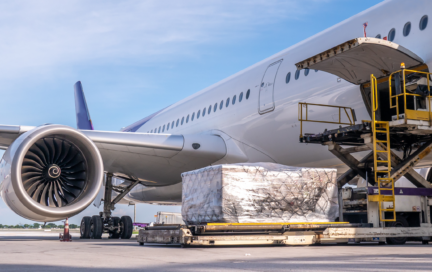
Extreme weather often delays, cancels, or diverts cargo flights. While an aircraft can fly above the weather, the cargo is highly vulnerable on the ground.
- The exposure: Cargo is exposed to wind and rain during loading, unloading, and staging on the open tarmac.
- The damage: Ground crews must often work through torrential downpours. Without proper ground barriers or protective wrapping, unshielded cargo can sustain severe water damage in seconds.
Sea freight: The container rain risk
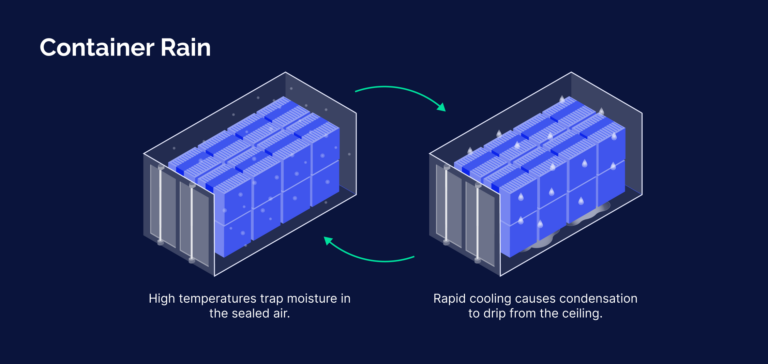
Sea freight faces a different threat: internal condensation trapped inside sealed steel containers. When a container moves from a hot, humid port to a cold open ocean, it triggers the container rain cycle.
- The trap: High-humidity air is sealed inside the container during loading. Standard wooden pallets make this worse because they absorb gallons of ambient moisture before they are packed.
- The cycle: During the day, sunlight heats the container deck, driving internal temperatures past 50°C. This intense heat pulls hidden moisture out of the pallets and boxes. At night, the thin steel walls cool down rapidly.
- The pour: When the container ceiling drops below the internal dew point, the trapped moisture condenses into heavy liquid drops. This water rains directly down onto your cargo.
Cargo acceptance refusals: Due to these extreme risks, airline handling agents and ocean freight consolidators regularly reject cargo that arrives in standard packaging or shows signs of humidity exposure, leaving shipments stranded at terminal gates.
12 best practices for monsoon supply chain resilience
You cannot change the weather, but you can change your operational architecture. To keep your cargo moving smoothly from June through September, employ these core strategic safeguards:
Sea freight
1. Prevent moisture damage with seaworthy packing and desiccants
Heavy-duty calcium chloride desiccants absorb up to triple their weight in water, locking it into a gel that won’t re-evaporate as daytime temperatures spike, protecting cargo from mold and condensation damage.
Our experts recommend making seaworthy packing a mandatory clause in your supplier contracts. This sets a clear expectation that the supplier must use high-quality, moisture-proof materials instead of standard commercial packaging.
2. Source plastic or kiln-dried pallets with verified low-moisture content
Source plastic or kiln-dried pallets with verified low-moisture content through approved origin suppliers to prevent ambient water from evaporating into the sealed steel container. A single standard wooden pallet can trap up to 20 liters of water absorbed right from the monsoon air; multiplying this across a 40-foot container means loading a hidden reservoir directly alongside your cargo.
3. Transition high-risk FCL shipments into flexible, frequent LCL consolidation programs
Transition high-risk FCL shipments into flexible, frequent LCL consolidation programs to accelerate cargo exit from high-humidity port zones. Rather than allowing cartons to absorb ambient humidity at the factory floor while waiting to build a full container load, smaller batches keep your supply chain moving.
4. Build in time buffers for inland drayage schedules
Set realistic time buffers into your inland drayage schedules to insulate upstream production timelines from sudden road and rail washouts. Automated adjustments based on seasonal port turnarounds protect your supply chain from unexpected terminal gate closures.
Air freight shipping
5. Enforce six-sided shrink wrapping with thick plastic bottom sheets at origin factories
Enforce six-sided shrink wrapping with thick plastic bottom sheets at origin factories to stop cargo cartons from wicking up groundwater on flooded tarmac surfaces. As standard wrapping leaves the bottom exposed, adding a baseline plastic shield prevents water from creeping up from wet airport warehouse floors.
For shipments transported on FOB and FCA terms, the supplier is responsible for the packaging and transport arrangements. Treat this as a mandatory operational check in your shipping instructions.
6. Add heavy-gauge polyethylene rain hats underneath outer netting
Apply heavy-gauge polyethylene rain hats underneath outer netting via your air freight ground handler to deflect torrential downpours during open-air runway loading. This safeguards unit load devices (ULDs) from sudden weather changes while waiting on open dollies for flight slots.
7. Track shipments via a centralized dashboard
Monitor live cargo updates using Forto’s centralized dashboard, and set advanced notifications for major milestones. This real-time visibility lets you implement pre-approved alternative routes before cargo gets stranded. If extreme weather strikes, use the in-app chat to quickly get updates from your operations manager.
8. Require fully covered, weather-proof trucks for airport transit
Instruct suppliers to use enclosed, weather-proof trucks for transportation to the airport rather than open vehicles. Verify that the truck bed is properly covered and entirely free of holes to prevent rainwater from damaging the cargo during transit. Explicitly mandate these conditions to ensure suppliers do not compromise on protection to save on trucking costs, keeping in mind that for shipments on FOB terms, the supplier pays for and arranges this transport.
Cross-modal strategic planning
9. Leverage enhanced visibility
Real-time data tracking weather patterns and vessel positions allows your team to proactively reroute shipments before delays cascade. Reactive logistics during the monsoon is expensive; a weather alert that arrives 48 hours early is worth far more than one that arrives as a port closes. With the Ship by Forto platform, you gain full visibility over your entire supply chain, including Advanced Notifications that proactively alert you to ETD/ETA changes or cargo rollovers.
10. Build pre-approved contingency plans
Secure space and bookings well ahead of the peak storm season. If seaports face congestion, having a pre-approved plan to shift a portion of cargo to Asia-Europe Rail Freight or Sea-Air multimodal solutions means you are not negotiating for capacity during a crisis.
11. Secure comprehensive cargo insurance
The monsoon creates financial exposure beyond the cargo itself, including D&D charges, detour fuel costs, and emergency re-routing fees that standard policies may not cover. Encourage your team to secure comprehensive coverage before the season starts.
12. Partner with a reliable logistics provider
Build strong logistics provider relationships before the storms hit. Partner with a reliable digital freight forwarder like Forto to steer through this period. Supported by our dedicated local experts across Asian manufacturing hubs and our AI-driven data quality, we help you secure alternative capacity and provide the proactive insights you need to keep your cargo moving.
The big picture: Weather tracking and proactive planning drive resilience
The Asian monsoon season is an unavoidable reality of global logistics, but the disruptions it brings to your network are preventable to an extent. Protecting your bottom line from weather-induced delays requires a strategic shift from reactive problem-solving to proactive planning with a reliable logistics partner.
The difference between a stranded shipment and a successful peak-season delivery comes down to early preparation. When you secure contingency space ahead of time and leverage real-time data, your supply chain remains fluid even when regional infrastructure is disrupted.
Our dedicated logistics teams are based across two key Asian manufacturing hubs (China and Vietnam) to help you navigate the monsoon season. By actively tracking local weather developments and maintaining direct communication with regional service providers and port authorities, they proactively secure alternative modal capacity and insulate your inventory from sudden delays.
Get in touch with Forto’s global supply chain experts to draft a monsoon-resilient logistics strategy tailored specifically to your trade lanes.