
What was once a US-centric event has evolved into a European revenue driver for many businesses. Global Black Friday online sales are pushing past $79 billion, and the DACH region leads the board. In 2024, German shoppers had the highest average Black Friday budget in Europe at €317 per person.
To capture this revenue, inventory must be on the shelf by November 27. For any last-minute shipments, supply chain managers should transition to Air Freight to maintain product availability and protect Q4 margins.
The capacity illusion: why air space remains tight
A common assumption this quarter is that the EU’s abolishment of the €150 de minimis duty-free threshold created a surplus of available air capacity.
The regulatory change shifted some B2C volume out of the air network. Despite this shift, capacity remains constrained due to several specific market dynamics:
- Reactive network adjustments: Airlines rapidly reallocated their freighters to routes with higher demand, such as the Transpacific, to maintain profitable load factors.
- No extra freighters: Carriers are operating with existing schedules and are not adding extra freighters for the peak period. When allocating available space, airlines often rank general cargo below prioritized tech and medical shipments.
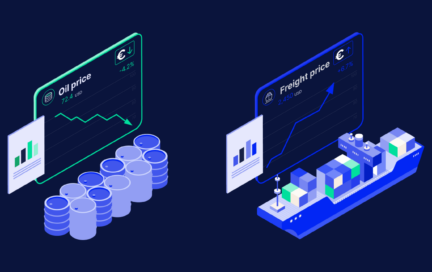
- Geopolitical factors: Regional disruptions continue to affect flight corridors. These disruptions occasionally lead to schedule changes or cancellations. In parallel, jet fuel pricing establishes a high baseline for rates.
The true cost of a Q4 stockout (and when Air Freight pays off)
Black Friday and Cyber Monday sales now run for more than one weekend. Most retailers promote across the full week of November 23 to 29, and during that week products can sell several times faster than usual. Stock that looks safe on Monday can be gone by Thursday.
When a product runs out, the lost sale is only part of the damage. You may also lose the profit you would have made, the money spent on ads for a product you can’t ship in time, and customers who may not come back. Marketplaces add penalties too, such as ranking drops within 48 hours.
Shoppers also won’t wait for you to restock. Research from the Grocery Manufacturers Association (GMA) shows that 70% to 80% of shoppers will buy a competitor’s product rather than wait for a late delivery.
This is why air freight can be a smart lever. It costs more per kilogram than sea freight, but supply chain teams don’t judge it on shipping cost alone. They compare the extra cost with the total cost of a stockout.
Air freight is usually worth it when the lost profit and follow-on damage from a stockout would be more than 15% to 20% of the product’s landed value.
To protect margins while beating the clock, supply chain teams must match the exact urgency of the cargo to the right mode.
Timelines & cut-offs
Flight transit represents only one segment of the total lead time. European airport customs warehouses frequently operate with staffing constraints. Available trucking capacity out of airports has also contracted following recent EU regulations.
Supply chain teams must build a buffer of 48 to 72 hours into their timelines to cover destination ground handling and customs clearance. This ensures inventory is available for the promotional window.
Working backward from Black Friday (November 27), the target cutoff dates for origin departures are:
- Black Friday restocks: Cargo must depart by Calendar Week 46 (November 9 to 15) via air freight.
- Christmas restocks: Cargo must depart by Calendar Week 49 (November 30 to December 6) via air freight.
Black Friday is 2 weeks away: how to restock with Air Freight
Air freight is the primary mode for deadlines under 10 days. This applies specifically to top-selling items and high-value inventory in BFCM categories like electronics, fashion, and beauty.
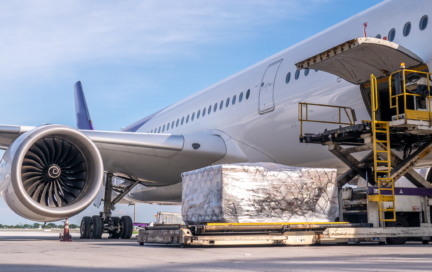
Shippers must account for physical constraints during booking. Widebody passenger aircraft carry the majority of air cargo and generally cap pallet height at approximately 160 cm. Taller loads require freighters with fewer scheduled flights. Certain goods, including lithium-ion batteries, are restricted from passenger aircraft entirely. Shippers are billed based on chargeable weight. Bulky, lightweight products incur costs based on volume rather than actual weight.
Tiered air services
Supply chain teams can control costs by splitting shipments based on how urgent each one is. With Forto, you can choose from three tiers:
- Premium: about 1 day, airport to airport
- Standard: about 3 days, airport to airport
- Deferred: about 5 days, airport to airport
Planning with Forto
The end-of-year planning period is right around the corner. When the busy season hits, an empty shelf costs more than the lost sale, so your cargo needs to arrive fast and on time, without any compromise on service, cost transparency, or visibility.
From a single pallet to dedicated flight capacity, we secure the space you need. Our in-house experts help you match each shipment to the right standard, premium, or express option, with guaranteed capacity on premium global carriers and 90%+ on-time performance.
You can quote, compare, and book instantly with 100+ freight carriers, track your shipments globally with advanced notifications, and keep your emissions in check with reporting and certified sustainable aviation fuel.
Talk to our team today and plan your Q4 shipments before capacity gets tight.