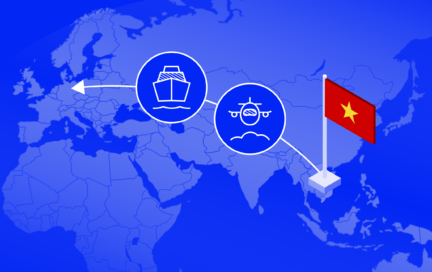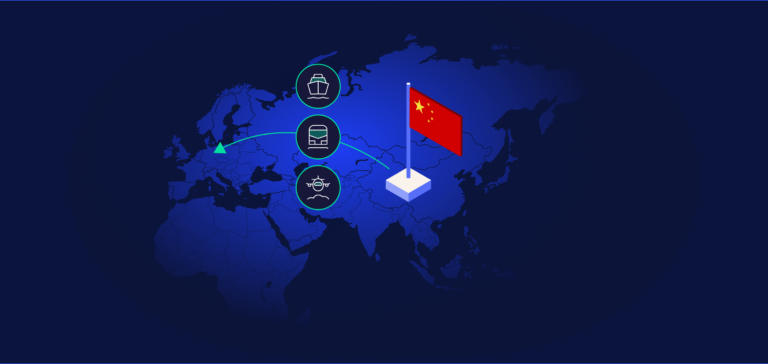

The China to Europe trade lane is one of the most critical, high-volume corridors in global logistics, and in 2026, it’s become one of the most complex to manage.
Ongoing geopolitical tensions, shifting trade routes, and fluctuating costs have made transit times and pricing less predictable across all major transport modes.
As supply chains become more exposed to volatility, logistics teams face increasingly difficult decisions when choosing the right transport mode: how to meet delivery expectations while balancing operational risks and budget constraints.
In this article, we compare the main transport modes from China to Europe, outline their pros and cons in the current global context, and help you determine which approach best fits your business needs.
What makes China–Europe shipping unique?
The China–Europe logistics corridor combines multiple transport modes with a highly complex operating environment. Political, geographic, and economic factors, along with rapidly evolving infrastructure, all influence freight planning and reliability across the corridor.
Multiple transport options across one trade lane
Compared to many other global trade lanes, China–Europe offers a rare degree of flexibility, with established transport modes across sea, rail, and air. A combination of major maritime routes, an extensive Eurasian rail network, and well-developed air cargo connections gives companies a range of options across cost, speed, and cargo requirements.
Exposure to geopolitical and economic shifts
China–Europe shipping is particularly sensitive to geopolitical and economic developments, which can quickly affect routing and transit times. Ongoing disruption in the Middle East, for example, has forced many carriers to avoid the shorter Suez Canal and reroute vessels around the Cape of Good Hope, increasing transit times and fuel costs.
Alternative overland corridors are also gaining attention as companies look to reduce geopolitical and operational risk across Eurasian transport networks. This includes routes across Central Asia and the Caspian region, offering additional flexibility across the China–Europe corridor.
Strategic importance and scale
The trade lane plays a central role in global supply chains, linking major manufacturing hubs in Asia with consumer and industrial markets in Europe. China remains one of the EU’s largest trading partners, with bilateral trade in goods reaching over €700 billion annually.
Over the past two decades, rail links in particular have expanded significantly, supported by infrastructure investment across Central Asia and Europe. Many of these developments are linked to China’s Belt and Road Initiative, often described as part of a modern “Silk Road”.
Together with its established maritime routes and air corridors, this highly interconnected network supports large-scale, cross-border trade, while the range of transport modes gives companies a degree of flexibility and resilience despite ongoing disruption.
China–Europe: current conditions and trade-offs
Shipping across the corridor remains volatile. Since the start of the Red Sea crisis in 2024, disruption-driven rerouting has extended ocean transit times, while uneven capacity and changing trade flows continue to affect freight rates and reliability across all transport modes.
As a result, planning has become more complex throughout the past years and logistics teams must balance speed, cost, and operational risk when deciding on the best shipping methods for their needs.
The main transport modes from China to Europe
Sea, rail, and air freight each have distinct characteristics and offer different advantages depending on shipment priorities, timelines, and budget constraints. Understanding the strengths and limitations of each mode is essential for making effective transport decisions during periods of disruption.
Sea Freight
Sea freight still dominates high-volume trade flows between Asia and Europe, particularly for non-urgent shipments where controlling cost is critical.
Despite disruption and rerouting, extensive ocean networks connect key Chinese export hubs such as Shanghai, Ningbo, and Shenzhen with European ports including Rotterdam, Hamburg, and Antwerp.
Pros
- Lowest transport cost at scale
- Suitable for high-volume and lower-margin goods
- Lower carbon emissions compared to air freight
- Broad carrier coverage and specialized container availability
- Flexible options across FCL and LCL shipping
Cons
- Long transit times, often exceeding 30–45 days at present
- Exposure to disruption, rerouting, and port congestion
- Lower schedule reliability compared to rail or air freight
- Greater planning complexity during volatile periods
Sea freight is still heavily affected by disruption across the Middle East, including the Red Sea and Strait of Hormuz, with many vessels rerouted around the Cape of Good Hope, adding an estimated 10–15 days to transit times.
Structural overcapacity across global ocean freight markets has led carriers to rely more heavily on blank sailings and schedule adjustments to manage disruption and capacity imbalances, reducing predictability across services.
For many importers, however, sea freight is the most practical option for large shipment volumes, particularly FCL, where transit time is less important than cost efficiency.
Rail Freight
In light of the extended disruption affecting sea and air transport, rail freight has become a useful strategic option for shipments between China and Europe. It balances transit time and cost, offering significantly faster lead times than ocean shipping while remaining more cost-effective than air freight.
Major rail hubs such as Xi’an, Chongqing, and Chengdu connect with European destinations including Duisburg and Warsaw through extensive Eurasian rail corridors. Capacity is also increasing to meet demand, supported by continued infrastructure investment and the development of new routes.
Pros
- Faster transit times than sea freight, typically 14–25 days depending on route
- Greater schedule reliability and predictability than sea freight
- Suitable for time-sensitive and industrial cargo without the cost of air freight
- Lower carbon emissions compared to air freight
Cons
- Limited capacity compared to sea freight
- Dependence on geopolitical stability and cross-border infrastructure
- Less flexibility for large-scale volume shifts
- Potential delays at border crossings and transfer points
Rail demand has grown significantly, with China–Europe Railway Express volumes reportedly increasing by around 25% in the first two months of 2026. This reflects rail freight’s growing strategic role as disruption and uncertainty continue to affect global transport networks.
Air Freight
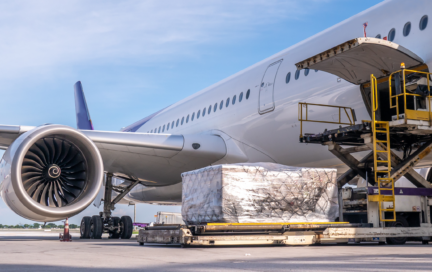
Air freight is the fastest option for shipments from China to Europe. It’s commonly used for high-value, time-sensitive cargo such as electronics, semiconductors, pharmaceuticals, and urgent inventory replenishment, with transit times often ranging between 4–7 days.
Airline networks operate through major cargo hubs such as Shanghai Pudong, Hong Kong, and Frankfurt, enabling fast connections between Asian manufacturing centers and European markets.
Pros
- Fastest available transport mode
- High schedule reliability and predictable transit times
- Suitable for urgent, high-value, or time-sensitive cargo
- Helps fill inventory gaps and reduce supply chain disruption
Cons
- Highest transport costs compared to all major modes
- Capacity can tighten quickly during periods of disruption
- Less cost-effective for large shipment volumes
- Budget constraints deter routine use for many companies
Air freight demand remains elevated as companies respond to delays and disruption in ocean and rail freight. High e-commerce volumes from China and urgent inventory replenishment are placing further pressure on available capacity.
Rerouting requirements, fuel surcharges, and higher operating costs are driving elevated air freight rates across many routes. As a result, air freight is often only used tactically to protect supply chains, particularly when disruption affects slower transport modes.
Comparing sea, rail and air freight
Choosing the right transport mode between China and Europe has become more complex amid ongoing disruption and operational uncertainty. The table below provides a simple comparison of sea, rail, and air freight.
| Transport mode | Typical transit time | Relative cost | Reliability | Best suited for |
| Sea freight | 30–45+ days | Low | Medium | High-volume, cost-driven shipments |
| Rail freight | 14-25 days | Medium | Medium-high | Time-sensitive shipments balancing speed and cost |
| Air freight | 4-7 days | High | High | Urgent, high-value, or time-critical cargo |
Balancing cost, speed, and reliability
The right transport mode depends on shipment priorities, inventory strategy, and tolerance for disruption. Currently, companies are shifting between sea, rail, and air freight depending on business requirements and cost pressures.
In many cases, such decisions need to be made quickly in response to sudden changes across transport networks.
How strategies are adapting
Ocean freight has already been dealing with structural overcapacity and Red Sea-related uncertainty, leading to blank sailings, uneven schedules, and rate volatility. More recent disruption across the Middle East has added further pressure, making rail and tactical air freight increasingly relevant for urgent shipments and inventory protection.
At the same time, rail freight has also faced operational pressure despite strong demand growth. Infrastructure upgrades and bottlenecks across parts of the European rail network, particularly in Germany and at key hubs such as Małaszewicze in Poland, have reduced capacity and affected reliability. In response, some companies are shifting critical cargo toward air freight, while others are increasing use of alternative rail corridors through Central Asia.
More broadly, the industry is seeing more frequent shifts between transport modes as companies respond to disruption and changing operational pressures. Flexibility is now being built into transport planning as a risk-management and continuity tool.
What companies need now
As transport planning becomes more dynamic, companies need greater visibility and flexibility across their supply chains. If you are switching between transport modes, maintaining an overview across shipments, carriers, and routes is essential.
Logistics teams are now placing more emphasis on coordination and real-time data when disruption affects transit times or schedules.
Forto supports this through its flexible sea, rail, and air freight services and a digital platform, giving you shipment visibility, proactive notifications, and direct operational support.
Looking ahead
There is no single “best” transport mode for China–Europe shipping in 2026. Instead, logistics teams need to continuously balance cost, speed, and reliability as market conditions evolve.
Sea, rail, and air freight each continue to play important roles depending on shipment priorities, timelines, and risk tolerance. For many companies, maintaining flexibility is now just as important as choosing the right mode itself.
If you are looking for an experienced logistics partner to help coordinate your China-Europe transport more effectively, get in touch with our team.
Frequently asked questions